Our Honeymoon · 2027♥ Shortlist

New to all this? Start here

A plain-language guide to the three kinds of honeymoon we’re comparing — what they are, what a day looks like, the choices that matter, and the trade-offs. About a 10-minute read.

The three trips in one minute

Wildlife that walks up to you

Galápagos

Volcanic islands 600 miles off Ecuador. A small boat (the ones we’re considering carry 16 guests) is your floating hotel for a week; it sails between islands mostly at night and each day a naturalist guide takes you ashore and snorkeling.

You’ll see
Sea lions on the beach, blue-footed boobies, marine iguanas, giant tortoises, sea turtles and reef sharks while snorkeling. The animals have no fear of people — park rules ask you to stay about 2 m (6 ft) away, and they often come closer on their own.
Hardest part
Some overnight crossings rock; days are structured (two outings a day at set times); wet landings and snorkeling can have currents and surge; hot and sunny in Jan–Feb.
Best if
You want close-up wildlife, snorkeling every day and diving, with almost no jet lag.
See Galápagos options →
Lions, elephants and a tent with a view

Safari + beach

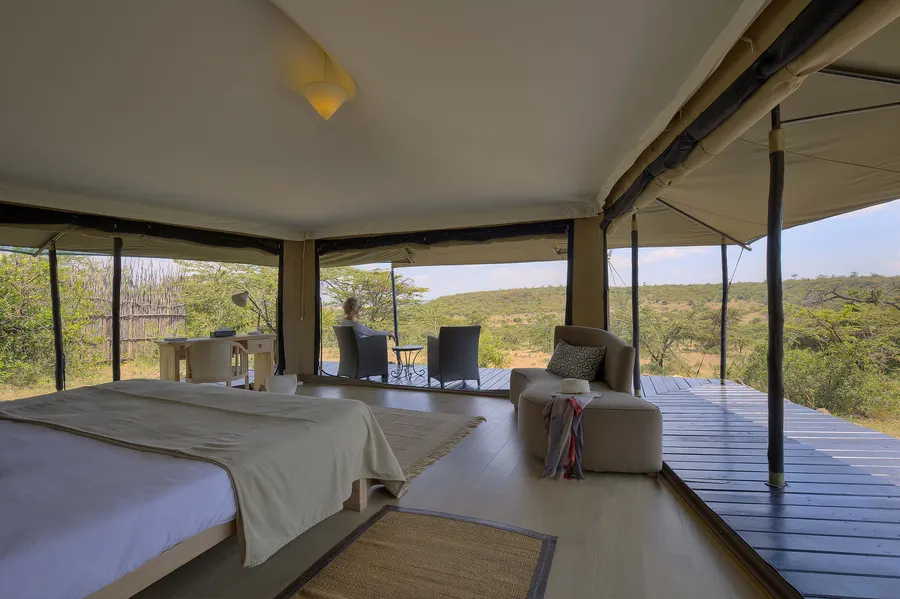
Fly to Kenya or Tanzania, then small planes to remote camps of 6–10 luxury tents. A guide drives you out at dawn and late afternoon to find animals. Finish with a few days on an Indian Ocean beach with diving.

You’ll see
Lions, cheetahs, leopards, elephants, giraffes, huge herds; in February in Tanzania, thousands of newborn wildebeest. Starry nights, bush dinners, hot-air balloons.
Hardest part
Long journeys (about 19–23 h each way) and an 8-hour time change; early starts; bumpy dirt roads; malaria precautions and vaccines.
Best if
You want the most romance and luxury for the money, big dramatic animals, and almost no time on boats.
See Safari + beach options →
Ice, penguins and the end of the world

Antarctica

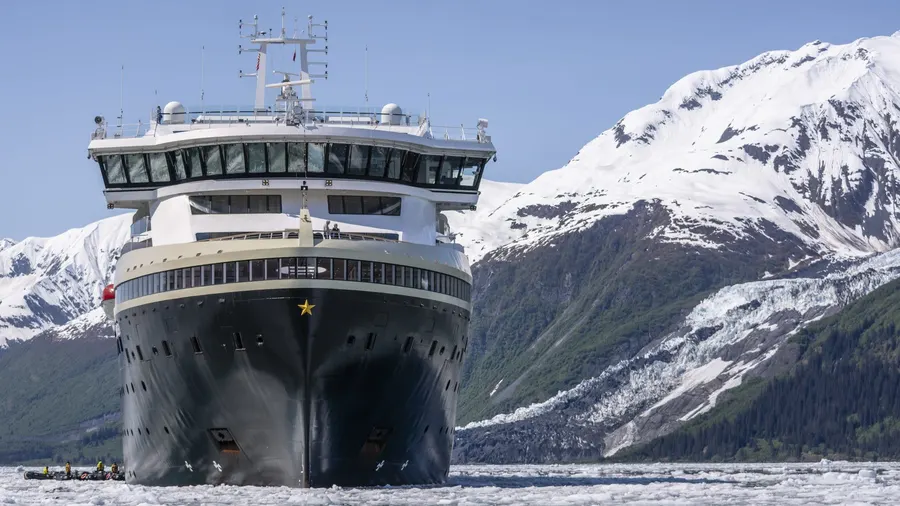
Fly to the tip of Argentina, board an expedition ship (our options carry ~100–500 guests), cross the Drake Passage (about 2 days of open ocean), then spend ~5 days landing by Zodiac among penguins and icebergs. Then cross back.

You’ll see
Penguin colonies with chicks, seals, whales, glaciers and icebergs under very long days (around 18–20 hours of daylight in January, ~16 by mid-February); kayaking or camping on the ice for some.
Hardest part
The Drake crossing is often rough — the hardest trip for seasickness; at our budget the cheapest cabins are mostly twins, so a double bed means a specific (pricier, scarcer) cabin; fixed group schedule; weather decides every day.
Best if
Antarctica is a lifelong dream, you both handle boats well, and you’d trade comfort for once-in-a-lifetime scenery.
See Antarctica options →

What a day actually looks like

A Galápagos cruise day

  1. 6:30Breakfast while the boat anchors off a new island
  2. 7:30Morning landing by panga (small boat): a guided 1½–2 h walk among nesting birds, iguanas and sea lions
  3. 10:00Snorkel from a beach or the panga — turtles, rays, playful sea lions — or kayak / paddleboard
  4. 12:30Lunch on board while the boat moves; nap or sun deck
  5. 15:00Afternoon landing or hike
  6. 17:00Second snorkel or a panga ride along cliffs
  7. 18:30Guide’s briefing for tomorrow, then dinner
  8. NightThe boat sails to the next island while you sleep (this is when you may feel the motion)

A safari camp day

  1. 5:45Wake-up call: coffee brought to your tent
  2. 6:15Morning game drive — the best light and most active animals; breakfast picnic in the bush
  3. 10:30Back to camp for brunch
  4. MiddaySiesta, pool, massage — animals rest in the heat too
  5. 15:30Afternoon tea
  6. 16:00Afternoon drive or a guided walk
  7. 18:30Sundowner drinks on a hill as the sun sets
  8. NightDinner by the fire; an escort walks you to your tent; lions and hyenas calling in the dark

An Antarctica landing day

  1. 7:00Wake-up announcement from the expedition leader
  2. 8:30Suit up in the mudroom; Zodiac to a penguin colony or a cruise among icebergs (1½–2½ h). On big ships, groups take turns.
  3. 12:30Lunch while the ship moves to the next bay
  4. 14:30Afternoon landing, kayak paddle or snowshoe hike (activities depend on weather and spots)
  5. 18:00Recap and lecture in the lounge
  6. 19:00Dinner; in January it stays light until ~10–11 pm
  7. NightMaybe camping on the ice. On Drake days: lectures, seabird watching — or lying down if queasy.

How each trip is built (our top pick of each)

Each square is a day, Boston to Boston. Compare all trips in detail →

Travel dayPart travel, part funOn land (town, city, free day)Scuba divingCruise day (landings & snorkeling)SafariBeach & island timeOpen sea (Drake Passage)

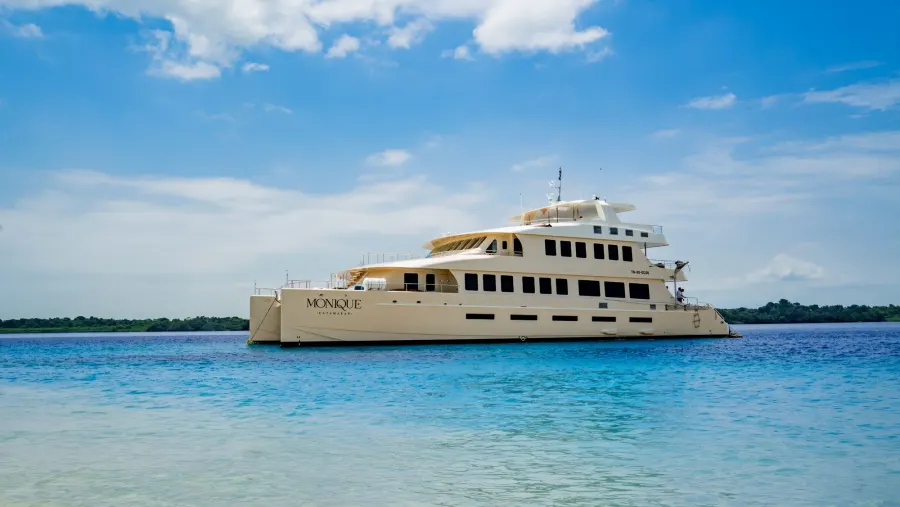
Galápagos · Monique

Jan 16 – 29 · $26,630 all-in

  1. Sat Jan 16: Fly Boston → Guayaquil
  2. Sun Jan 17: Fly to the islands (morning) · afternoon swim at Las Grietas
  3. Mon Jan 18: Dive day 1
  4. Tue Jan 19: Dive day 2
  5. Wed Jan 20: Honeymoon day on Santa Cruz
  6. Thu Jan 21: Monique: Board · highlands tortoises
  7. Fri Jan 22: Monique: Floreana
  8. Sat Jan 23: Monique: Española
  9. Sun Jan 24: Monique: San Cristóbal · Kicker Rock
  10. Mon Jan 25: Monique: Santa Fe & South Plaza
  11. Tue Jan 26: Monique: Santiago & Bartolomé
  12. Wed Jan 27: Monique: Genovesa
  13. Thu Jan 28: Last morning visit · disembark · fly to Guayaquil · dinner out
  14. Fri Jan 29: Fly home
  • 11 honeymoon days of 14
  • ≈ 14 h to get there · −1 h time change
  • 7 nights on a boat · 6 on land
Flights & transfers
Getting there
  1. Boston → Guayaquil via Panama CityCopa, 1 stop · 7:34 am → 5:38 pm · night in Guayaquil≈ 10 h
  2. Guayaquil → Baltra (Galápagos)next morning; ~1 h 50 min≈ 2 h
  3. Baltra → Puerto Ayorabus · 5-min ferry · taxi · water taxi≈ 1.5 h
Getting home
  1. Boat → Baltra airportafter the last morning visit≈ 1 h
  2. Baltra → Guayaquilnight in Guayaquil≈ 2 h
  3. Guayaquil → Boston via Panama CityCopa, 1 stop · daytime≈ 11 h

Safari · Kenya + Diani

Jan 27 – Feb 9 · $25,916 all-in

  1. Wed Jan 27: Overnight flight Boston → Nairobi
  2. Thu Jan 28: Arrive Nairobi ~10 pm
  3. Fri Jan 29: Bush plane to the Mara · afternoon drive
  4. Sat Jan 30: Kicheche Valley: drives, walk, night drive
  5. Sun Jan 31: Kicheche Valley: drives, walk, night drive
  6. Mon Feb 1: Game-drive transfer to Kicheche Bush
  7. Tue Feb 2: Olare Motorogi: big cats · dawn balloon
  8. Wed Feb 3: Olare Motorogi: big cats · dawn balloon
  9. Thu Feb 4: Morning drive · fly to Diani (2¼ h) · beach afternoon
  10. Fri Feb 5: Reef dives at Diani
  11. Sat Feb 6: Reef dives at Diani
  12. Sun Feb 7: Beach & spa (no diving before flying)
  13. Mon Feb 8: Fly to Nairobi · overnight flight
  14. Tue Feb 9: Arrive Boston
  • 9½ honeymoon days of 14
  • ≈ 20 h to get there · +8 h time change
  • 0 nights on a boat · 11 on land
Flights & transfers
Getting there
  1. Boston → Nairobi via Amsterdam, London or Doha1 stop · overnight · night near Wilson airport≈ 19 h
  2. Nairobi Wilson → Maasai Mara airstripbush plane, may stop at other strips · 15 kg soft bags≈ 1.5 h
During the trip
  1. Kicheche Valley → Kicheche Bushgame drive between camps≈ 1 h
  2. Maasai Mara → Ukunda (Diani)direct bush flight≈ 2.3 h
Getting home
  1. Ukunda → Nairobi Wilson≈ 1.3 h
  2. Wilson → Nairobi international airportcross-town transfer≈ 1 h
  3. Nairobi → Boston via Amsterdam, London or Doha1 stop · overnight≈ 20 h

Antarctica · HX Roald Amundsen

Jan 28 – Feb 10 · $24,016 all-in

  1. Thu Jan 28: Overnight flight Boston → Buenos Aires
  2. Fri Jan 29: Arrive 11 am · Buenos Aires afternoon
  3. Sat Jan 30: Charter flight to Ushuaia · board
  4. Sun Jan 31: Drake Passage southbound
  5. Mon Feb 1: Drake Passage southbound
  6. Tue Feb 2: Antarctic Peninsula: landings & Zodiacs (in shifts)
  7. Wed Feb 3: Antarctic Peninsula: landings & Zodiacs (in shifts)
  8. Thu Feb 4: Antarctic Peninsula: landings & Zodiacs (in shifts)
  9. Fri Feb 5: Antarctic Peninsula: landings & Zodiacs (in shifts)
  10. Sat Feb 6: Antarctic Peninsula: landings & Zodiacs (in shifts)
  11. Sun Feb 7: Drake Passage northbound
  12. Mon Feb 8: Drake Passage northbound
  13. Tue Feb 9: Disembark · charter to Buenos Aires · overnight flight
  14. Wed Feb 10: Arrive Boston (10 days before our Feb 20 limit)
  • 5½ honeymoon days of 14 + 4 crossing the Drake
  • ≈ 20 h to get there · +2 h time change
  • 10 nights on a boat · 1 on land
Flights & transfers
Getting there
  1. Boston → Buenos Aires via New York1 stop · overnight · HX hotel night in Buenos Aires≈ 16 h
  2. Buenos Aires → UshuaiaHX charter (included)≈ 3.5 h
During the trip
  1. Ushuaia → Antarctic PeninsulaDrake Passage · ~2 days~2 days
Getting home
  1. Antarctic Peninsula → UshuaiaDrake Passage · ~2 days~2 days
  2. Ship → Ushuaia airportdisembark early morning≈ 1.5 h
  3. Ushuaia → Buenos Aires≈ 3.5 h
  4. Aeroparque → Ezeiza airporttransfer + check-in buffer≈ 2 h
  5. Buenos Aires → Boston via New Yorksame day as disembarking≈ 16 h

Galápagos: the choices that matter

Which islands each of our boat options visits:

Pacific Ocean · not to scaleIsabelaGenovesaSantiagoBartoloméRábidaN. SeymourBaltra ✈Santa CruzS. PlazaSanta FeSan CristóbalEspañolaFloreanaFernandinaMarchenaPinta1. Board · Santa Cruz highlands12. Floreana23. Española34. San Cristóbal · Kicker Rock45. Santa Fe56. South Plaza67. Santiago · Sullivan Bay78. Bartolomé89. Genovesa910. Black Turtle Cove · disembark at Baltra10
  1. Board · Santa Cruz highlands
  2. Floreana
  3. Española
  4. San Cristóbal · Kicker Rock
  5. Santa Fe
  6. South Plaza
  7. Santiago · Sullivan Bay
  8. Bartolomé
  9. Genovesa
  10. Black Turtle Cove · disembark at Baltra

Which route

Boats follow fixed 7-night routes set by the national park, so no single week sees everything. East routes cover Española (colorful iguanas, boobies), Genovesa (bird island) and San Cristóbal. West routes cover Isabela and Fernandina (penguins, flightless cormorants, young volcanoes). Use the map above to see each option’s route.

Boat or hotels

You can also stay in hotels and take day boats. Cheaper and less seasick, but you can’t reach the remote islands and spend hours on fast day-boats. We combine both: 4 nights in a hotel on Santa Cruz (for diving) + 7 nights on a boat.

Beds

Many boats sell “double or twin” cabins: the same cabin made up as one bed or two singles. A few have fixed double/queen/king beds; some cabins are twin-only. Ask for the bed set-up and cabin number in writing — we’ve marked each option 🛏 ✓ (fixed double), “ask”, or ✗ (twin only).

Boat class

“Tourist” → “first class” → “luxury”. Park rules cap each guided group at 16 visitors, so most small cruise boats carry 16 and visit the same sites; what changes is cabin size, finishes, food (buffet vs plated), crew per guest and guide experience.

Catamaran vs. monohull

Catamarans (two hulls) roll less at anchor; monohulls with stabilizers roll less while sailing. Both help with seasickness; neither removes it. A low, middle cabin moves least.

How long

Boats offer 4, 5, 8 or 15-day trips. 8 days / 7 nights is the sweet spot: enough islands without fatigue.

Diving

Most cruise boats don’t dive — you snorkel twice a day. We add 2 dive days from Santa Cruz with a top-rated dive shop. (Dedicated dive liveaboards to Darwin & Wolf need far more experience.)

Safari: the choices that matter

Where (in Jan–Feb)

Kenya’s Maasai Mara: a short dry season, superb lions and cheetahs, fewer crowds than summer. Tanzania’s Ndutu: the wildebeest calving season — huge herds and predators. Botswana: rainy “green season”, lush and cheaper but wet. Rwanda: mountain gorillas — exactly 1 hour with them, after a hike that can take anywhere from 30 minutes to 4+ hours at altitude.

Park vs. private conservancy

National parks have more vehicles at each sighting and strict rules. Private conservancies (like the Kicheche camps’) limit vehicles and allow off-road driving, night drives and walks — more intimate.

Camp style & size

A luxury tented camp is a canvas suite with a real bed and en-suite bathroom. Smaller camps (6–10 tents) feel personal; bigger lodges have pools and more staff.

Shared or private vehicle

Usually you share a 6-seat jeep with other guests. A private vehicle lets you choose when to stop and when to go home — worth it on a honeymoon.

Fly-in vs. drive

Small “bush planes” hop between dirt airstrips (1–2 h) instead of 6–8 h on rough roads. They cost more and limit you to 15 kg soft bags.

Beach finish

Most couples end with 3–4 nights at the coast to rest. Diani (Kenya) and Mafia/Zanzibar (Tanzania) have good beginner-friendly diving.

Health

Malaria prevention (pills plus repellent and nets), and for the Mara a yellow-fever vaccine the CDC recommends — a certificate is only required on some routings. Visas online. A travel-clinic visit sorts it all.

Antarctica: the choices that matter

Sail or fly the Drake

Most ships sail the Drake Passage from Ushuaia: ~2 days each way of open ocean, sometimes calm, often rough. “Fly the Drake” trips fly 2 h to the South Shetland Islands instead — far easier on seasickness but ~$40k+ for two, over our budget.

Ship size

Antarctic tourism rules (IAATO) allow at most 100 passengers ashore at a site at once (some sites allow fewer), and ships with more than 500 passengers can’t land at all. Ships under ~100 guests can usually land everyone together; bigger ships rotate groups, so landings are shorter or fewer — but big ships ride the waves better.

Where it goes

Most trips are “Peninsula only” (10–12 days). Falklands & South Georgia (king penguin colonies) add a week and $10k+.

Cabins & beds

Expedition cabins are small and many have twin beds. Double-bed cabins exist on most ships but are a specific (often pricier) category, and some “twin” cabins can be pushed together. Since a real double is a must for us, we only consider double-bed cabins — and get the cabin number in writing.

Activities

Zodiac landings are included. Kayaking, camping and snowshoeing are sometimes included, sometimes extra — and always limited and weather-dependent.

January vs. February

January: penguin chicks hatching, most daylight. February: chicks bigger, more whales.

Common worries

Will we get seasick?

Galápagos: possible on a few overnight crossings and in small boats; most days are at anchor or ashore. Safari: no boats beyond short dive and snorkel trips — bumpy roads instead. Antarctica: the Drake Passage is notoriously rough; plan on medication. Whatever we pick, see a travel clinic and trial seasickness medication at home first.

Is it physically hard?

No special fitness, but it is active. Galápagos: 1–2 mile walks on uneven lava, wet landings, and snorkeling that can have currents or surge. Safari: mostly sitting in a vehicle; walks are optional; gorilla treks can be 4+ hours uphill at altitude. Antarctica: climbing in and out of Zodiacs in waves, short snowy hikes.

Is it safe?

All three are established tourist regions with experienced operators. Main risks: sunburn and ocean conditions (Galápagos), malaria and road travel (safari — pills, repellent and nets reduce the risk), slips, cold and rough seas (Antarctica). Travel insurance with medical evacuation is essential, but read the exclusions and limits.

Can we scuba dive in Antarctica?

There is diving, but it’s for experienced cold-water divers: operators like Aurora and Oceanwide require a Drysuit Specialty and at least 30 drysuit dives, and those voyages cost about $40k for two. We have ~20 dives and none in a drysuit, and our in-budget ships don’t dive or snorkel — so diving belongs to the Galápagos or the safari beach. More

Will the hot tubs be packed in Antarctica?

Only HX (2 tubs for ~490 guests) and SH Vega (1 jacuzzi for 152) have them among our in-budget ships; Ocean Nova and MV Ushuaia have none. Expect a crowd right after landings, and tubs closed on rough Drake days — go early morning, at dinner, or late evening (light until ~10:30 pm). Details

Will we have internet?

Galápagos boats: patchy satellite Wi-Fi (Integrity has Starlink). Safari camps: Wi-Fi in the main tent. Antarctica: slow, often paid satellite Wi-Fi. Plan to be mostly offline — it’s a honeymoon.

What’s the weather in Jan–Feb?

Galápagos: hot (~85 °F), sunny with short showers, warm water. Kenya/Tanzania: warm days (~80 °F), cool mornings, occasional storms. Antarctica: around freezing (25–40 °F), wind and spray — layers and waterproofs.

Is it romantic?

Safari camps are built for honeymoons (private dinners, couples’ discounts, double tents as standard). Galápagos boats are small and social — you eat with the other 14 guests — but sunset decks and our own cabin with a king or double bed. Antarctica ships are the most group-oriented, and double-bed cabins must be booked specifically.

Who are the other guests?

Galápagos & Antarctica: mostly couples and retirees from the US, UK, Europe and Australia; families sometimes. Safari camps: couples and honeymooners; few children in conservancies.
Glossary

Panga / Zodiac
Small inflatable or open motorboat that takes you from the ship to shore.
Wet / dry landing
Wet: you step into ankle-deep water on a beach. Dry: you step onto rocks or a dock.
Naturalist guide
A certified local guide who leads every outing and explains what you see.
Itinerary / route
The fixed sequence of islands a boat visits on a given week.
Stabilizers
Fins under a ship that reduce rolling side to side.
Catamaran
A boat with two hulls side by side — steadier at anchor.
Game drive
A guided outing in an open safari vehicle to look for animals.
Conservancy
Private land leased from local communities next to a national park, with fewer vehicles allowed.
Bush plane / airstrip
A small 12-seat plane landing on dirt runways near the camps.
Sundowner
A drink at sunset on a scenic spot during the evening drive.
Big Five
Lion, leopard, elephant, buffalo and rhino.
Calving season
Late January to February in Tanzania’s southern Serengeti, when wildebeest give birth.
Drake Passage
The roughly 600-mile stretch of open ocean between South America and Antarctica.
Expedition team
The ship’s naturalists and guides who drive Zodiacs and give lectures.
Mudroom
Where you change into boots and waterproofs before landings.
Polar plunge
A quick (voluntary!) jump into the freezing water.
All-in
Our total for two: flights, boat/camps, fees, insurance, tips, meals and extras.
Dive-to-fly
The ~24-hour wait between your last scuba dive and flying.
Ready to dig in? Compare the trips side by side (time, flights, money) and use Find our fit to rank them by what matters to you both.