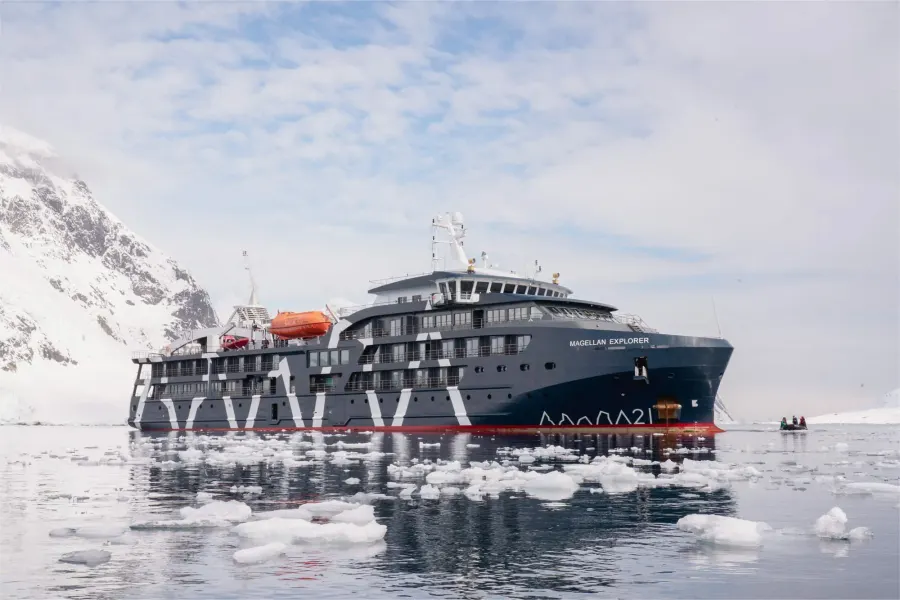
Small expedition ships to the Antarctic Peninsula from Ushuaia, Jan 5 – Feb 20.
The catch: nothing that flies over the Drake Passage fits $30k this season (cheapest fly-both-ways ≈ $19k per person), so every in-budget option means ~2 rough-sea days each way.
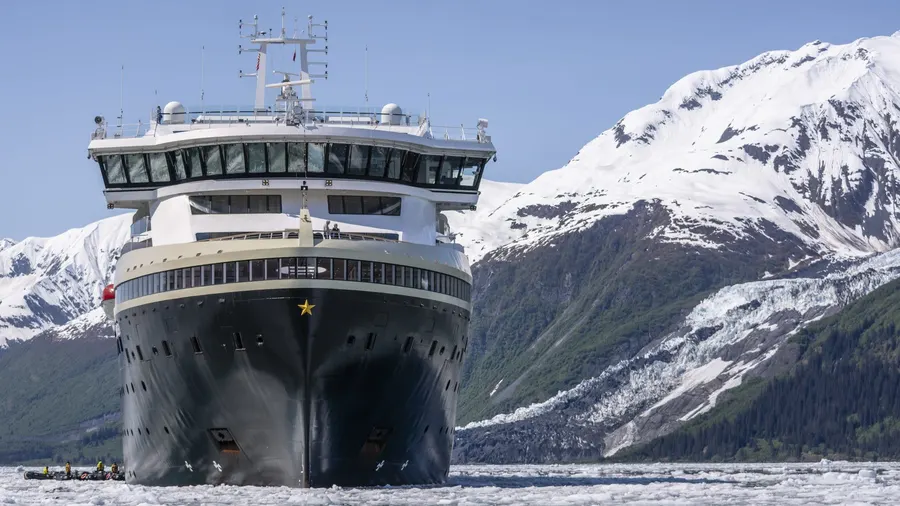
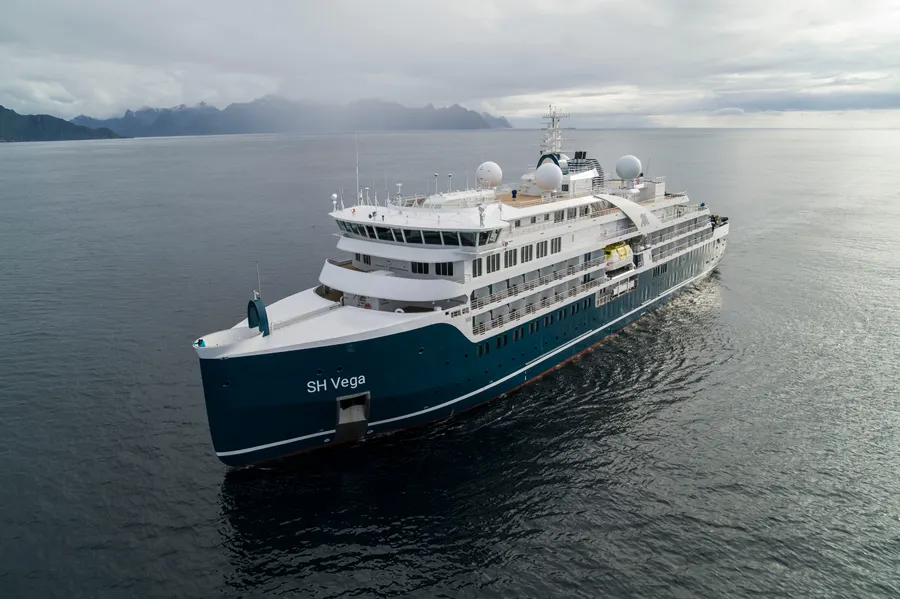
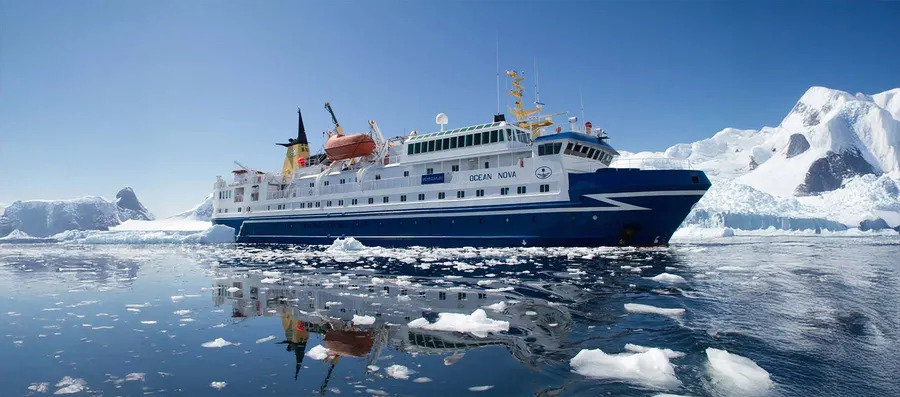
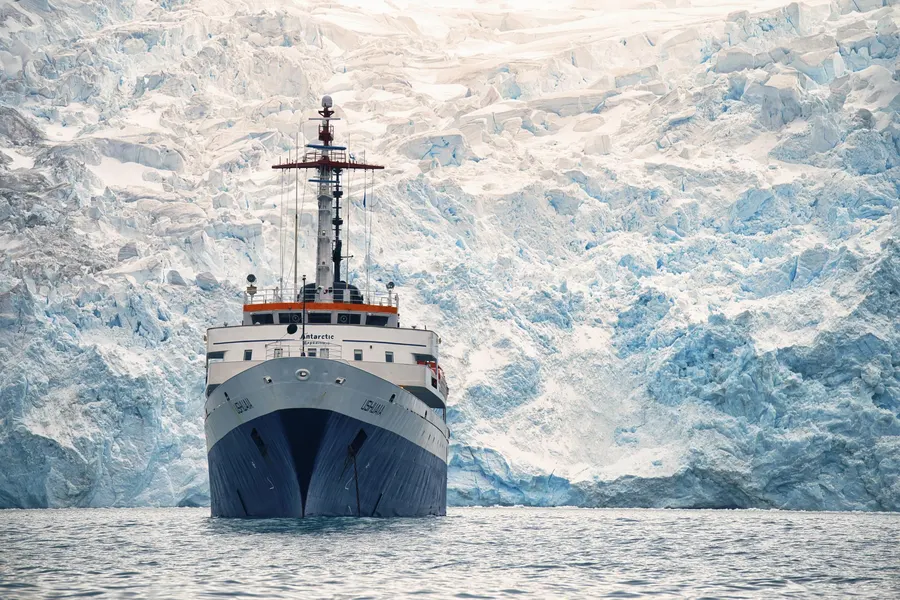
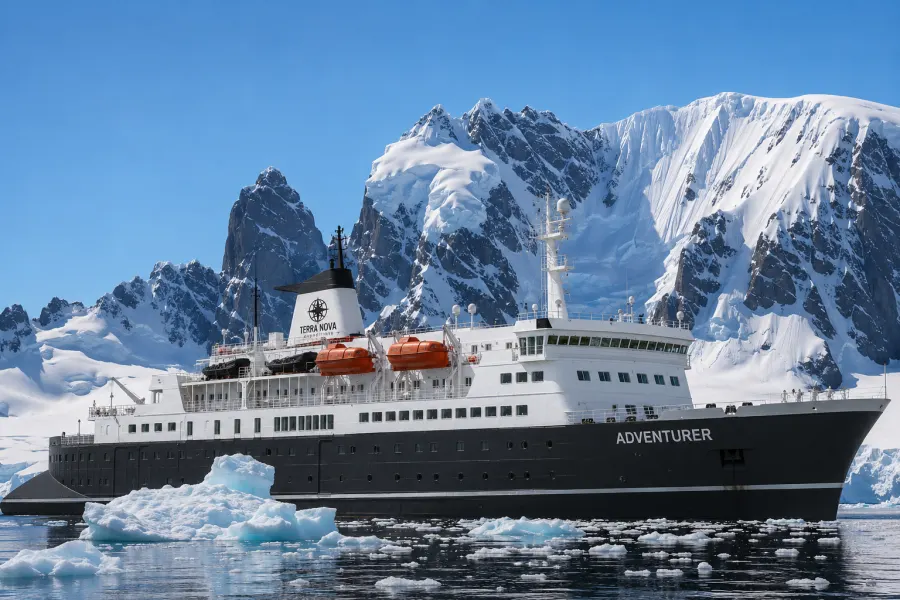
With a double bed (a must for us): HX Roald Amundsen, Jan 29 – Feb 9 is our pick — double bed by default, the steadiest ship we can afford, ≈ $24,000 all-in — but it carries 490 guests. Swan Hellenic SH Vega, Jan 22 – Feb 2 is the more intimate choice: 152 guests, queen bed, stabilizers, drinks and tips included, ≈ $29,100 (right at the cap). Ocean Nova and MV Ushuaia have fixed doubles but no stabilizers; Terra Nova’s double-bed cabin puts it ≈ $880 over.
Decide on seasickness first: do a doctor-guided medication trial before paying.
Updated for our must-have double bed. Nothing that flies over the Drake fits $30k, so every in-budget option sails ~2 rough-sea days each way. Double-bed cabins in budget: HX (double by default, stabilized), SH Vega (queen, stabilized, at the cap), Ocean Nova and MV Ushuaia #640 (fixed doubles, no stabilizers).
Can we scuba dive in Antarctica?
Yes, Antarctica has scuba diving — but not for us on this trip. Only a few expedition operators run polar dive programs, and they all require serious cold-water experience:
Aurora Expeditions (pioneered polar diving): Advanced Open Water plus a Drysuit Specialty, at least 30 drysuit dives, and 10 dives in the past 12 months (5 of them in a drysuit). Up to two dives a day, a handful of divers per voyage, extra fee. Voyages in our window start around $17–20k per person. Aurora ↗
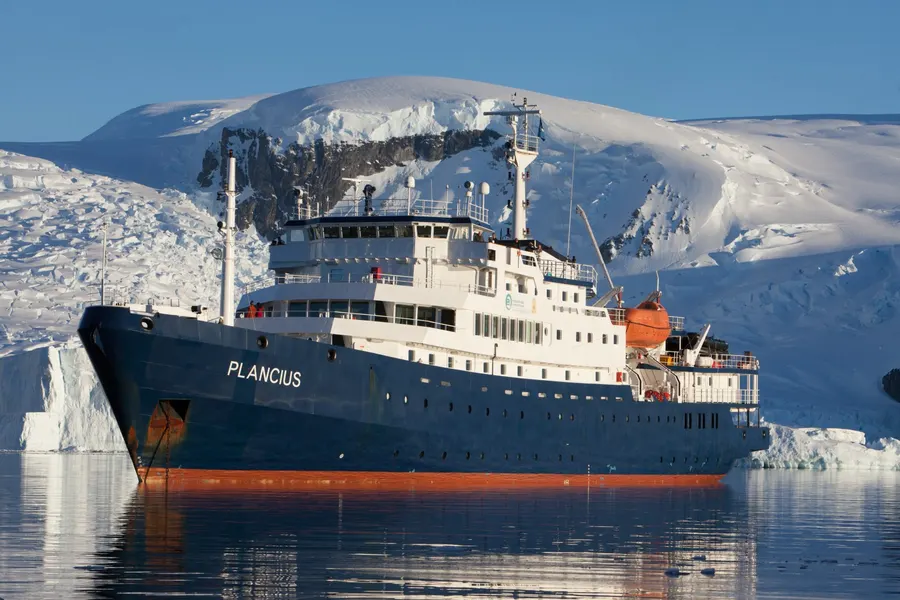
Oceanwide Expeditions (Hondius, Plancius, Ortelius): at least 30 drysuit dives in cold water, a doctor’s fitness note, and you bring your whole kit (hooded drysuit, two freeze-resistant regulators, BCD…). Buddy diving with guides on the surface only; there’s no decompression chamber anywhere near. Requirements ↗
None of our in-budget ships (HX, SH Vega, Ocean Nova, MV Ushuaia) offers scuba or snorkeling. Aurora also sells drysuit snorkeling with no certification needed, but its voyages are far over our cap.
What would we see — and isn’t it freezing?
It is as cold as liquid water gets: about 28–34 °F (−2 to +1 °C), since seawater freezes around 28.6 °F. Divers wear a hooded drysuit over two layers of thick undergarments, dry gloves and freeze-proof regulators. Your lips and cheeks sting for the first few minutes, hands go first, and dives are short (often 30–40 minutes). Done right it’s cold-but-fine; the risk is in the skills (drysuit buoyancy, frozen regulators free-flowing) and in having no chamber nearby.
Icebergs from below — about 90% of a berg is underwater: blue, sculpted, glowing walls you can’t see from a Zodiac.
Curious seals and penguins — fur and leopard seals come to look, penguins rocket past near colonies, and with luck a whale. Leopard seals are apex predators; guides end the dive if one gets pushy.
A surprisingly colorful seabed — soft corals, sponges, sea squirts, carpets of sea stars, sea urchins, nudibranchs, kelp and seaweed walls, krill, and “polar giants”: sea spiders the size of a dinner plate and giant isopods.
Water clarity — often clearer than New England, though summer plankton blooms can cloud it.
For comparison, Galápagos water in Jan–Feb is about 72–77 °F in a 5–7 mm wetsuit, with hammerheads, sea lions, turtles, marine iguanas — and even penguins (Galápagos penguins around Bartolomé and western Isabela).
Where we stand: ~20 logged dives and no drysuit dives. Reaching 30 drysuit dives by January would mean a Drysuit Specialty now plus ~28 more dives in 45–50 °F New England water over the next 12 weeks, buying a drysuit kit (~$2,000–4,000 each), and still paying ≈ $40k for a dive-capable voyage. So for this honeymoon, the diving happens in the Galápagos or on the safari’s beach finish. Polar diving makes a great anniversary goal: Drysuit Specialty and a season of Cape Ann dives first.
Will the hot tubs be packed?
On the big ship, at peak times — yes. Soaking in a hot tub while icebergs drift past is a highlight, but everyone has the same idea right after a cold landing. Only two of our in-budget ships have one:
HX: about 20 tub seats for ~490 people. Reviewers say the ship rarely feels crowded overall, but the tubs fill up right after landings and during scenic cruising. Landings run in rotating groups, so the rush is spread out a little.
SH Vega: fewer people, but only one jacuzzi (size not published) plus the heated pool — expect to share or wait at the same peak moments.
Rough seas: outdoor tubs and pools are usually closed when the ship is rolling (crew’s call), so don’t count on them during the Drake crossings. The saunas usually stay open.
When to go: early morning, during dinner, or late evening — in late January it stays light until about 10:30 pm, so a late soak still comes with a view. Head up straight after your own Zodiac return, before the next group.
Galápagos contrast: on a 16-guest yacht like Monique, one sun-deck hot tub is shared with at most 14 others, in 80 °F air.
Antarctica pick · double bed + steadiest ship🛏 Double ✓